
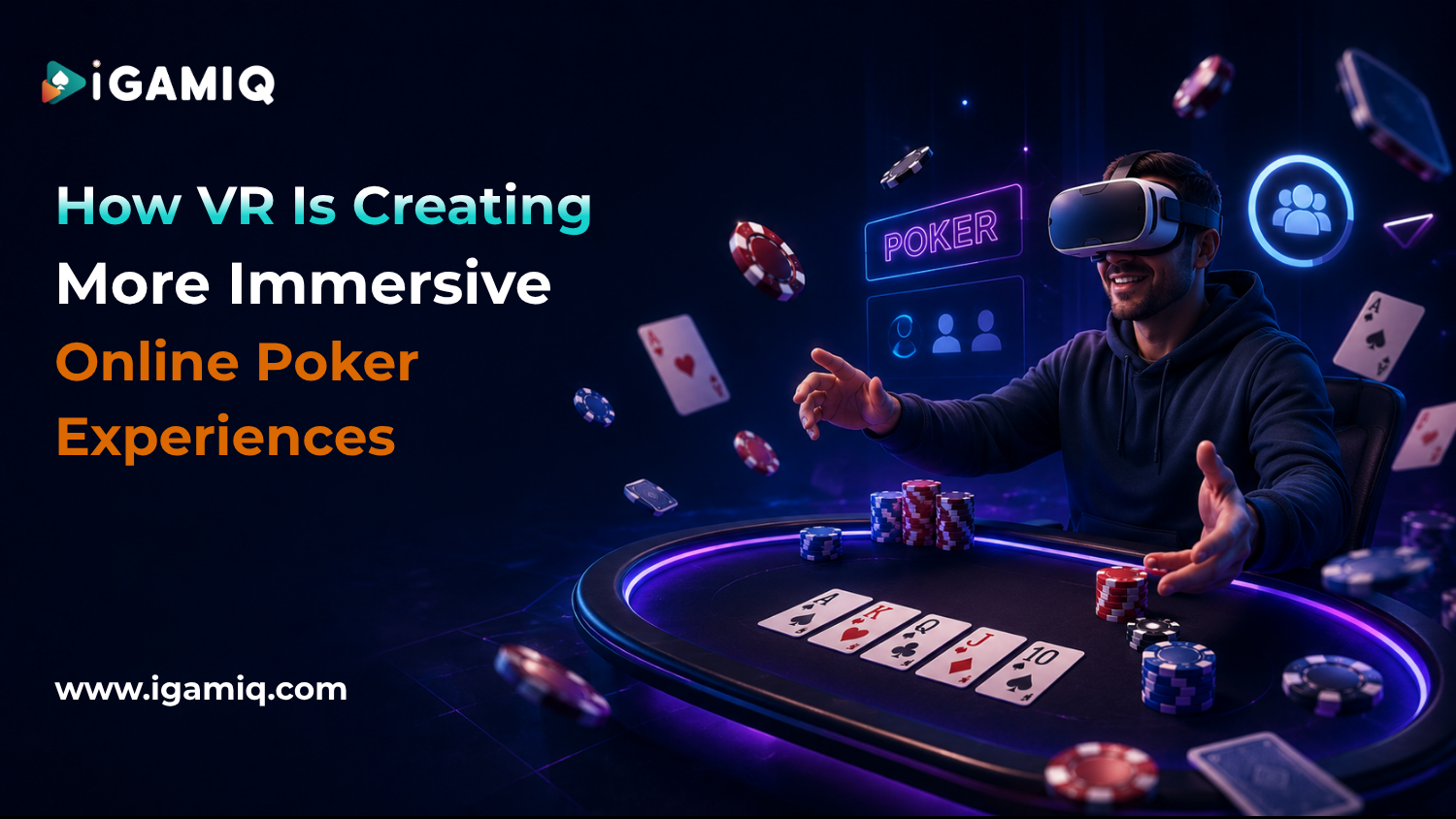
The online poker table has always been a flat thing; you look at a screen and cards rendered in two dimensions. You click buttons to bet, raise, or fold. The opponent across the virtual field is nothing more than a username and a stack of digital chips. For years, this was accepted as the natural limit of online poker. Players traded the rich sensory experience of a real casino for the convenience of playing from home.
That trade-off is finally disappearing, and virtual reality is transforming what online poker can feel like. For the first time, players can sit at an online table that looks, sounds, and behaves like a physical one. They can see opponents’ moves. They can hear chips shuffle. They can reach out and slide a stack into the pot. This article explores how VR integration in online poker platforms provides immersive experiences to players.
Table of Contents
The Sensory Gap in Traditional Online Poker
Real online poker is a full-body activity. You do not just calculate odds. You watch how the player across from you breathes when they look at their cards. You listen for hesitation in their voice. You feel the weight of chips in your hand and the texture of cards between your fingers. These sensory details are not decorative. They are the speech of the game.
Traditional online poker stripped all of that away. The result was a game that worked mechanically but felt hollow emotionally. Players could still bluff, but they could not see the flinch. They could still rise, but they could not hear the sigh. The social and psychological layers that make poker fascinating were reduced to statistics on a screen.
VR fixes this problem not by adding flashy graphics but by restoring sensory information that was always missing.
Walking Into a Virtual Card Room
The first thing VR poker game does is change where the player stands. Instead of looking at a window on a monitor, the player puts on a headset and finds themselves inside a three-dimensional space. That space is a poker room. It has walls, tables, chairs, lighting, and sometimes even background music or ambient noise from distant slot machines.
This matters more than most people expect. A player who feels physically present in a room behaves differently from a player who feels like they are watching a broadcast. The brain responds to the illusion of space. When you turn your head and see a player sitting to your left, your sense of engagement shifts. You are no longer a spectator. You are a participant.
Some VR poker platforms allow players to choose their environment. A quiet high-stakes room with leather chairs and dark wood panels creates a different mood than a bright tournament hall filled with dozens of tables. Players can select the atmosphere that suits their preferred style of play. This personalisation deepens the connection between the player and the game.
Seeing Opponents as Real People in VR Poker Platforms
The most significant limitation of traditional online poker is the invisibility of opponents. You cannot see their face in traditional online poker games. You cannot watch their hands. You cannot tell if they are nervous or confident. All you have are betting patterns and timing tells, which are useful but incomplete.
VR Poker Platform changes this by giving each player a body. That body is usually an avatar, but it is an avatar that moves. When a player looks at their cards, you see their head tilt downwards. When they are considering a call, you might see them lean back or tap their fingers. These are not prescripted animations. They are driven by the player’s actual head and hand movements, captured by the VR headset and controllers.
For the first time in online poker, you can watch someone react. That is not a small improvement. It is a fundamental shift in how the game is played. Bluffing becomes more complex because you can try to project calm while your heart races. Reading opponents becomes more intuitive because you can see when they hesitate.
Voice chat adds another layer. In traditional poker, typed messages feel awkward and slow. In VR, you can simply speak. Table talk returns as a genuine tool. You can distract, provoke, or comfort your opponents with your actual voice. The social texture of live poker comes back.
Handling the Cards and Chips in VR Poker Games
One of the quiet frustrations of traditional online poker is the abstraction of actions. You want to raise it. You click a button labelled “Raise”. The action is instantaneous but weightless. It feels like clicking through a spreadsheet.
VR Poker Game replaces buttons with gestures. You reach out with a controller-tracked hand, grab a stack of chips, and push them toward the center of the table. The chips make a sound as they slide. They stack realistically. When you toss them, they land with a clatter. These are small details, but they accumulate into a sense of physical presence.
Some VR poker systems go further and you can pick up your cards and hold them close to your chest, just as you would in a live game to prevent others from seeing. You can fan them out, peek at the corners, or slam them down on the table when you win. Every action that used to require a button click now requires a physical motion. The game slows down slightly, but it breathes in a way that flat-screen poker never could.
Tournament Atmosphere in VR Poker Systems
Large tournaments are where poker feels most electric. The buzz of dozens of tables, the murmur of conversations, the tension of a final table. All of these are missing from traditional online tournaments, which feel like playing against a spreadsheet of names.
VR Poker Platform changes that entirely, and a VR tournament can place you in a massive hall filled with tables. You can look around and see other matches in progress. You can walk over to a friend’s table and watch their critical hand. You can feel the energy of the room shift when a player gets eliminated near you.
For tournament organizers, this opens new possibilities. Live spectating becomes meaningful. Players can gather around a final table and watch the remaining competitors battle. The sense of occasion returns. A Sunday major no longer feels like another online session. It feels like an event.
Lowering Barriers Without Losing Depth
Critics of VR poker raise valid concerns. The equipment is expensive. Headsets cost hundreds of dollars. Not every poker player owns a gaming PC powerful enough to run VR software. Motion sickness affects some users, especially during long sessions.
These are real problems, but they are shrinking. Headset prices have fallen significantly over the past few years. Standalone headsets that do not require a separate computer are now common. Developers have learned to design experiences that reduce motion sickness through careful camera movement and comfort settings.
More importantly, the value proposition of VR poker games is becoming clear. Players who try it rarely return to flat-screen poker for their serious sessions. The immersion is not a gimmick. It is a genuine improvement to the game. As hardware improves and adoption grows, VR will shift from a niche option to the standard way to play online poker.
The Social Revival
Poker has always been a social game. The loneliness of traditional online poker was never a feature. It was a limitation of old technology.
VR Poker Game removes that limitation. When you sit at a virtual table, you are surrounded by people who are equally engaged in the same experience. You can congratulate someone on a well-played hand. You can groan together when the river card beats both of you. You can develop rivalries and friendships that span multiple sessions.
This social revival is the most important thing VR brings to poker. The cards and chips are just tools. The reason people play is the company. VR finally gives online players the company they have been missing.
Ready to Build the Next Generation of Immersive Virtual Reality Poker?
Virtual Reality Poker is not a distant future for online poker. It is happening now. Players are already gathering in VR card rooms, reading each other’s avatars, handling virtual chips, and experiencing the game as never before. The platforms that embrace this shift will define the next decade of online poker.
iGamiq is at the forefront of this transformation. Whether you need a full VR poker platform, a hybrid solution that bridges traditional and virtual play, or consultation on integrating immersive features into your existing product, iGamiq delivers. Partner with us for atmosphere, interaction, and trust.