
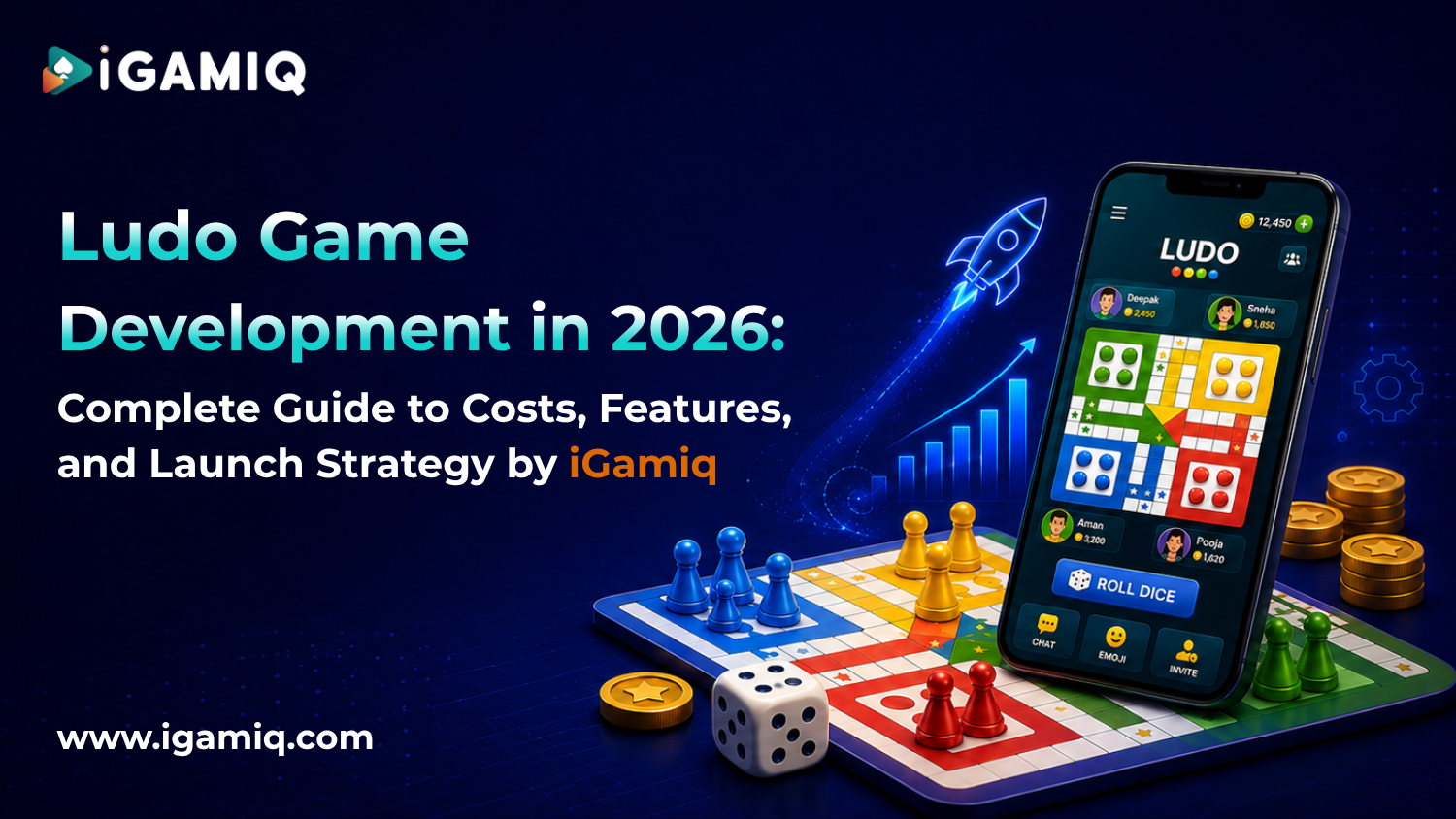
Every Indian family knows Ludo, as it is a game that used to be played on a wooden board with colourful tokens. The thrill of rolling a six when you need it most. This game has brought families together for generations, creating memories that last far beyond the final move. Now, that same magic lives inside millions of smartphones. Ludo has made the jump from physical boards to digital screens without losing any of its charm. In fact, mobile Ludo games have introduced this classic to entirely new audiences who never owned a physical board.
If you are considering building your own Ludo game app, timing works in your favor. The casual gaming market continues to grow. Players want familiar games with fresh twists. And Ludo sits perfectly at the intersection of nostalgia and accessibility. This guide walks you through everything involved in creating a Ludo game development in 2026, from essential features and development steps to real cost breakdowns and monetization strategies.
What Does Ludo Game Development Actually Mean in India?
Transforming a traditional board game into a mobile app sounds simple. The reality involves careful work across multiple disciplines. Ludo game development means taking the classic rules- four tokens per player, dice-based movement, safe zones, and the race to the center- and translating them into code that feels natural on a touchscreen. The game must respond instantly. The dice must feel random but fair. The experience must match the joy of playing on a real board. Beyond the basic mechanics, modern Ludo apps include online multiplayer, chat features, customization options, and various monetization elements. Players expect these additions. A bare-bones Ludo app rarely succeeds in today’s market.
Current Market Trends for Ludo Games
The numbers tell a clear story. Mobile gaming has exploded globally, and board games like Ludo have ridden this wave successfully. Millions of people download Ludo games every month across various app stores. The casual gaming sector, where Ludo firmly belongs, continues showing strong growth year after year. Players return to Ludo not because it is complicated but because it is familiar. They know the rules. They remember playing with family. That emotional connection keeps retention rates high.
For developers and investors, this means opportunity. A well-built Ludo app with the right features can attract substantial user bases without requiring the massive budgets of action or strategy games.
Step-by-Step Process of Ludo Game Development
Building a Ludo game application follows a logical sequence. Skip steps, and problems appear later.
Step 1: Research Your Market
Before writing any code, understand who you are building for. Study existing Ludo apps. Read their reviews carefully. What do players praise? What complaints appear repeatedly? These insights reveal exactly where competitors fall short and where your app can shine. Identify your target audience’s preferences. Do they want fast matches or longer strategic games? Do they care about customization options? Does voice chat matter to them? Answering these questions early prevents wasted development effort.
Step 2: Choose Your Platform
Decide where your game will live. Android dominates many markets with higher user volumes. iOS users typically spend more on in-app purchases. Building for both platforms simultaneously using cross-platform tools often makes the most sense for Ludo games.
Step 3: Design the Visual Experience
Players judge your game within seconds of opening it. Poor design drives them away immediately. Create a clean, colorful interface that resembles a real Ludo board without feeling cluttered on a small screen. Tokens should be distinct. The dice roll should feel satisfying. Animations should be smooth but not time-consuming.
Step 4: Build the Game Mechanics
This is the technical heart of your Ludo app. The dice rolling system must be genuinely random. Token movement must follow Ludo rules precisely- no shortcuts that break the game’s logic. Safe zones, blocking rules, and the exact conditions for moving tokens out of the starting area all need accurate implementation. Test these mechanics repeatedly. Players notice when something feels wrong, even if they cannot explain exactly what.
Step 5: Add Multiplayer Functionality
Single-player against AI is fine. Real-time multiplayer against friends or strangers is what drives engagement. Integrating multiplayer requires robust backend systems that handle multiple simultaneous games, player matchmaking, disconnection handling, and live game state synchronization. This is where many Ludo apps fail. Invest properly here.
Step 6: Thorough Testing of Ludo App
Testing cannot be rushed. Put the game in front of real users. Watch them play. Note where they hesitate or make mistakes. Fix every bug you find before launch. A single crash during an important match can cost you a player forever.
Step 7: Get Ready to Launch and Market
App store launch is just the beginning. Submit your game to Google Play and the Apple App Store. Use app store optimization to improve discoverability. Run targeted marketing campaigns to attract initial users.
Step 8: Post-Launch Support and Updates
Post-launch support separates successful games from abandoned ones. Respond to player feedback. Release regular updates with new features. Fix issues promptly. Players stay loyal to games that feel alive and cared for.
How to Make Money from Your Ludo App: Monetization Strategy
Monetization matters in every game application. A great game that loses money cannot survive.
- In-app purchases work well for Ludo. Sell custom tokens, unique board designs, special dice effects, or extra moves.
- Players who love the game will spend small amounts to personalize their experience.
- Ad integration generates steady revenue. Banner ads at the bottom of the screen work without heavy interruption.
- Rewarded video ads that give players extra coins or power-ups perform even better because players choose to watch them.
- Subscription models appeal to frequent players. For a monthly fee, remove all ads, unlock premium customization options, and provide early access to new features.
- Freemium remains the standard approach. The core game is free. Additional features and cosmetic items require payment.
- This lowers the barrier to entry while maintaining revenue potential.
Essential Features Your Ludo App Must Have
A successful Ludo app includes these features:
- Multiplayer mode: Online play against friends or random opponents.
- Offline mode: AI opponents for playing without internet access.
- Customization options: Different token designs, board colors, and dice styles.
- Chat and emojis: Basic communication during matches.
- Leaderboards: Rankings that show player progress over time.
- Social media integration: Sharing wins and inviting friends directly.
- Secure payments: Safe handling of any in-app purchases.
Ludo Game Development Cost and Pricing Plans Breakdown
Costs vary based on what you want to build.
- A basic Ludo game with simple design, single-player AI, and no multiplayer typically costs between $10,000 and $20,000.
- An advanced Ludo game with real-time multiplayer, customization options, leaderboards, and cross-platform support ranges from $20,000 to $50,000.
- An enterprise-level Ludo game with extensive features, tournament systems, advanced security, and ongoing support exceeds $50,000.
Remember, development cost excludes ongoing expenses like server hosting, marketing, customer support, and regular updates.
Should You Hire Dedicated Developers or Outsource?
Both approaches work well, but the right choice depends on your situation. Hiring dedicated developers for Ludo development gives you full control over the development process. Communication is direct. Changes happen quickly. But you assume responsibility for management, equipment, and retention.
Outsourcing to a company transfers responsibility to experienced teams. They handle management, provide specialized expertise, and often deliver faster. Communication flows through account managers rather than directly to developers. Many successful Ludo apps come from outsourcing partnerships with reputable development companies that specialize in casual games.
Summary
Ludo game development in 2026 offers real opportunity. The market is proven. Player demand remains strong. A well-executed app can attract millions of users and generate substantial revenue. Focus on quality. Include features players actually want. Monetize thoughtfully. Test thoroughly. Support continuously. And partner with developers who share your commitment to excellence. Your Ludo game could become the next success story.
Why iGamiq for Your Ludo Game Development
At iGamiq, our team has built casual games that players genuinely enjoy, not because we cut corners but because we pay attention to details that matter. We handle everything from concept to launch. Research, design, development, testing, deployment, and ongoing support all fall under our roof. Our expertise includes real-time multiplayer systems, fair randomness implementation, and monetization strategies that work. Contact us to request a demo.
Frequently Asked Questions
1. How long does Ludo game development take?
Typically 3 to 6 months depending on features and complexity.
2. Can I monetize my Ludo game?
Yes, through in-app purchases, ads, subscriptions, or freemium models.
3. Which platforms should I target?
Both Android and iOS for maximum reach.
4. Is multiplayer necessary for a Ludo game?
Real-time multiplayer significantly increases player engagement and retention.
5. How much does a basic Ludo app cost?
Between $10,000 and $20,000 for a simple version.
6. What makes a Ludo game successful?
Smooth gameplay, fair dice mechanics, engaging multiplayer, and regular updates.
7. Do I need a dedicated team for Ludo development?
Not necessarily. Outsourcing to experienced companies works well.
8. Can players play offline?
Yes. Offline mode with AI opponents is a standard feature.
9. How do I attract players after launch?
Combine app store optimization, social media marketing, and referral incentives.
10. Why choose iGamiq for Ludo development?
iGamiq offers specialized casual game expertise, end-to-end services, and proven results.