GGPoker did not become one of the world’s largest online poker platforms by accident. It earned that position through smart features, reliable technology, and a deep understanding of what players actually want. Today, millions of users log in daily to compete in Texas Hold’em, Omaha, and innovative game formats that keep the experience fresh.
For entrepreneurs and gaming businesses, this presents a clear opportunity. The online poker market continues expanding across Asia, Europe, and the Americas. Yet few platforms match GGPoker’s combination of professional tools and casual accessibility.
Building a competitive multiplayer poker platform like GGPoker is entirely achievable with the right approach. This guide walks you through every critical step, from understanding what makes GGPoker successful to managing development costs and choosing the right technology partner.
What Makes GGPoker the Benchmark
Before writing a single line of code, study why GGPoker dominates the market. The platform succeeds because it serves two very different audiences simultaneously.
Casual players appreciate the clean interface, quick game access, and low-stakes tables. Professional players stay for the advanced tools, Smart HUD displays opponent statistics, integrated staking allows bankroll management, and detailed hand histories support serious strategy improvement.
GGPoker also introduced unique game variants like Spin & Gold, which combines poker with tournament-style progression. These innovations keep the platform feeling modern even as competitors copy older features.
Your platform does not need to copy GGPoker directly. But you must understand the principles that made it successful: variety, reliability, depth for serious players, and simplicity for newcomers.
Step-by-Step Development Process of a GGPoker-Like App
Research and Market Analysis
Start with honest market research. Who are your target players? Which regions will you serve first? What do existing poker apps do poorly that you can do better?
Analyze competitor platforms not to copy them but to identify gaps. Maybe your region lacks a poker app with local language support. Maybe tournament structures are poorly designed elsewhere. These gaps become your entry points.
Platform Architecture Planning
Multiplayer poker is technically demanding. Your backend must handle hundreds or thousands of simultaneous games, each with real-time betting actions, player disconnections, and timeout handling.
Decide early whether you will build for web, mobile, or both. Cross-platform development using modern frameworks saves time and money compared to building separate native apps.
Game Engine Development
The poker engine is your platform’s heart. It must handle:
- Genuinely random shuffling and dealing
- Accurate hand ranking and winner determination
- Bet tracking across multiple betting rounds
- Side pot calculations for all-in situations
- Timer management for player turns
Any flaw in these mechanics destroys player trust. Build your engine with fairness as the highest priority.
User Interface Design
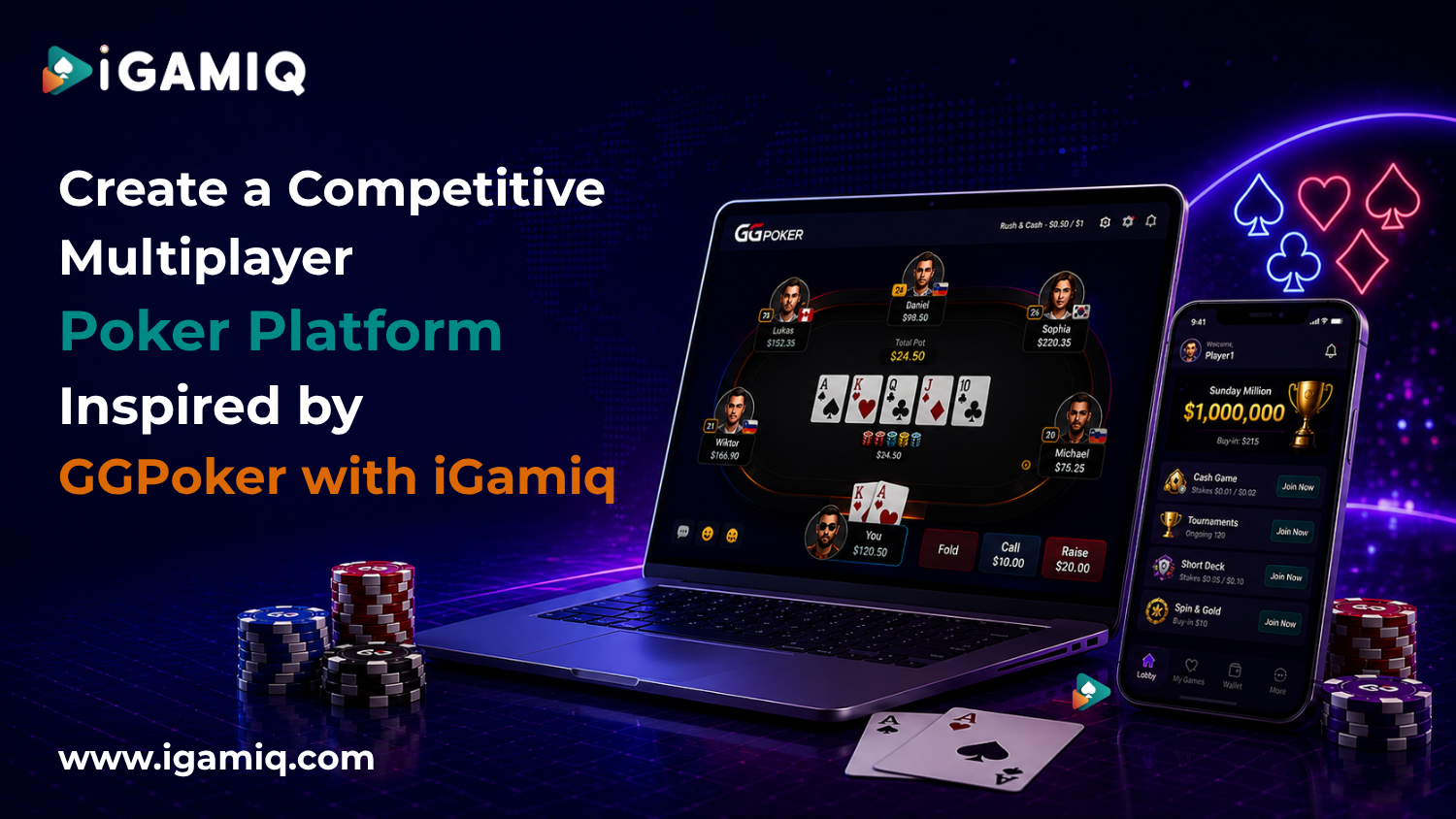
Poker interfaces must balance information density with visual clarity. Players need to see their cards, community cards, chip stacks, bet sizes, opponent counts, and action buttons, all without feeling overwhelmed. Professional players want detailed statistics and customization options. Casual players want simplicity. Your design must serve both without confusing one or the other.
Real-Time Multiplayer Implementation
Latency is the silent killer of poker apps. When a player raises, every other player at the table must see that action instantly. Delays of even one second create frustration and suspicion. Implement WebSocket connections for real-time communication. Design your system to handle reconnections gracefully when players lose internet access temporarily.
Payment and Wallet Systems
Secure payments separate serious poker platforms from hobby projects. Integrate multiple payment methods, credit cards, e-wallets, bank transfers, and UPI, depending on your target markets. Your wallet system must track deposits, withdrawals, bonuses, and rake fees accurately. Every transaction should be logged and auditable.
Tournament Management
Tournaments drive player engagement. Your platform needs:
- Scheduled tournament creation and management
- Automatic table balancing as players are eliminated
- Prize pool calculation and distribution
- Late registration handling
- Break timer management
Large tournaments with thousands of players demand especially robust backend systems.
Essential Features for Competitive Success
To compete with established platforms like GGPoker, include these features:
- Multiple poker variants: Texas Hold’em is non-negotiable. Omaha adds variety. Consider unique formats to differentiate your platform.
- Professional analytics tools: Hand histories, opponent statistics, and performance tracking attract serious players who generate consistent revenue.
- Secure authentication: Support email, phone, and social media registration with two-factor authentication options.
- Responsive design: Players use phones, tablets, and desktops. Your interface must work perfectly on every screen size.
- In-app chat: Allow table chat with appropriate moderation tools and player muting options.
- Leaderboards and achievements: Weekly leaderboards and milestone achievements give players reasons to return beyond individual games.
- Push notifications: Alert players about tournament starts, friend invitations, and special promotions.
GGPoker-Style App Development Cost Breakdown
Poker platform costs vary significantly based on features and quality standards.
- A basic poker app with limited variants, simple multiplayer, and essential payment integration typically costs between $10,000 and $40,000.
- An advanced platform with multiple variants, tournament systems, professional analytics, and custom UI design ranges from $50,000 to $150,000.
- A full-featured enterprise platform comparable to GGPoker, with unique game modes, advanced security, comprehensive analytics, and scalable infrastructure, starts above $150,000 and can exceed $200,000.
Additional costs include ongoing server hosting, security updates, customer support, marketing, and compliance with gambling regulations in your target markets.
Technology Stack Recommendations
Build your poker platform using proven technologies:
- Frontend: React for web, Flutter or React Native for cross-platform mobile apps
- Backend: Node.js, Python, or Java with WebSocket support for real-time communication
- Database: PostgreSQL or MySQL for transactional data, Redis for caching and session management
- Hosting: Cloud platforms like AWS or Google Cloud with auto-scaling capabilities
- Payment integration: Stripe, Razorpay, or region-specific providers
Why iGamiq Is Your Ideal Development Partner
Building a competitive multiplayer poker platform requires specialized expertise that generalist development agencies simply do not possess.
iGamiq brings years of focused experience in online poker game development. We understand the technical challenges, real-time synchronization, fairness verification, tournament scaling, and security, because we have solved them repeatedly.
Our approach is custom, not template-based. Your poker platform should reflect your brand, your audience, and your unique value proposition. We build accordingly.
We handle everything from initial research and planning through design, development, testing, deployment, and ongoing maintenance. Our team includes specialists in game logic, UI/UX, backend infrastructure, payment security, and regulatory compliance.
Most importantly, we prioritize user experience. A technically perfect poker platform fails if players find it frustrating. We build platforms that players genuinely enjoy using.
Conclusion
GGPoker proved that a well-executed poker platform can dominate global markets. But the online poker industry remains far from saturated. Players want variety. They want platforms made for their regions and preferences.
Creating a competitive multiplayer poker platform like GGPoker requires serious planning, robust technology, and experienced development partners. But the opportunity is real. The market is growing. And with the right approach, your platform can capture a meaningful share. Contact us for more details.
FAQs
1. What makes GGPoker different from other poker apps?
GGPoker combines casual-friendly design with professional tools like Smart HUD and integrated staking, plus unique game variants like Spin & Gold.
2. How long does it take to build a poker platform like GGPoker?
Development typically takes 4 to 12 months, depending on features, complexity, and team size.
3. What poker variants should I include?
Texas Hold’em is essential. Omaha is highly recommended. Additional variants can differentiate your platform.
4. How much does poker platform development cost?
Costs range from $10,000 for basic apps to over $200,000 for enterprise-level platforms comparable to GGPoker.
5. Do I need a gambling license?
Yes. Operating a real-money poker platform requires proper licensing in your target jurisdictions.
6. Can I run tournaments on my poker platform?
Yes. Tournament management, including scheduling, table balancing, and prize distribution, is a core feature.
7. How do I ensure fair gameplay?
Use certified random number generators, implement provably fair systems, and conduct regular security audits.
8. What payment methods should I support?
Support credit cards, e-wallets, UPI, and bank transfers, and consider cryptocurrency based on your target market.