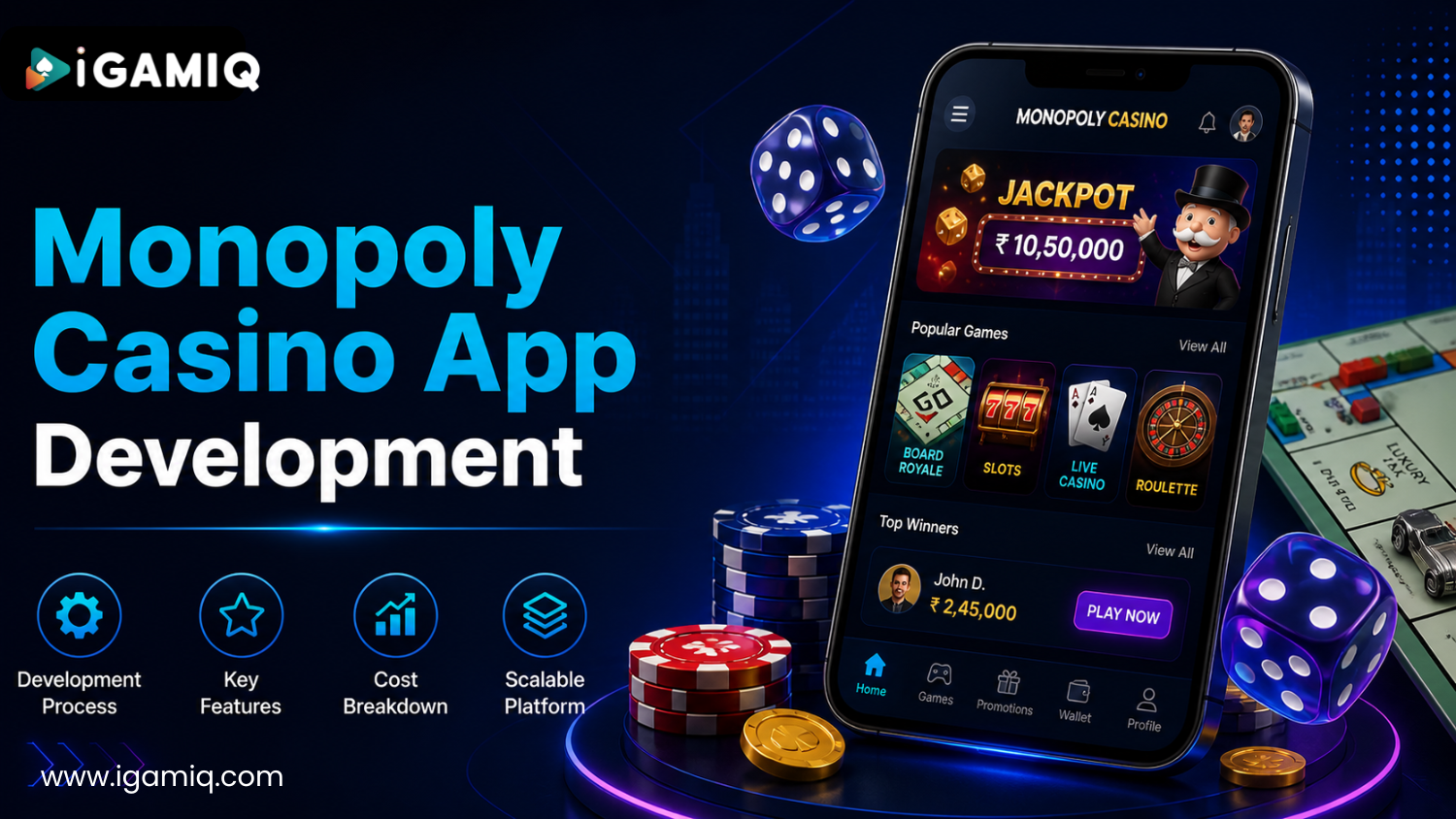
The mobile gaming landscape has undergone a remarkable shift over the past several years. What was once a simple collection of slot machines and card games has evolved into something far more sophisticated. Among the most successful innovations in this space is the fusion of traditional board game mechanics with casino-style gameplay, a hybrid model that Monopoly Casino has perfected. This success has sparked interest among entrepreneurs and gaming startups worldwide who want to build similar platforms.
If you are considering entering this market, understanding how to create a Monopoly Casino-like app is essential. This comprehensive guide walks you through everything from core features and development processes to cost structures and technology choices. We will also examine how iGamiq, a specialised gaming development firm, approaches projects of this nature.
Understanding the Monopoly Casino Concept
Before diving into development, it is important to understand what makes Monopoly Casino different from traditional casino applications. A standard casino app focuses purely on gambling mechanics: place a bet, spin a wheel or pull a lever, and receive a payout. The experience begins and ends with the transaction.
Monopoly Casino, however, adds layers of progression and engagement. Players collect properties, pass Go, build houses and hotels, and complete challenges, all while engaging with slot machines and other casino games. The board game elements provide context and purpose, while the casino mechanics deliver the excitement of chance-based rewards.
This hybrid approach solves a common problem in the gaming industry: user fatigue. Traditional casino apps often see sharp drop-offs after users lose a few rounds. But when those same users feel they are progressing through a board game or working toward a larger goal, they remain engaged even during losing streaks. This is the secret behind the format’s success.
Why Build a Monopoly Casino-Style Platform with iGamiq?
The decision to build a gaming platform of this scale should not be taken lightly. Many businesses attempt to create such apps using generic development teams that lack domain expertise. The result is often a clunky product with poor retention rates.
iGamiq brings focused experience in hybrid gaming development. They understand that a Monopoly Casino-like app is not a casino app with board game graphics pasted on top. Rather, it is a carefully balanced ecosystem where progression mechanics and chance-based rewards must work together seamlessly.
When you work with iGamiq, you gain access to pre-built modules for virtual economies, progression tracking, and multiplayer functionality. These building blocks significantly reduce development time while ensuring reliability. Additionally, iGamiq has established relationships with content providers for slot games and table games, allowing you to license high-quality casino content without building everything from scratch.
Essential Features for Your Monopoly Casino-Style App
Creating a successful platform requires careful attention to feature selection. Below are the core components that any serious Monopoly Casino competitor must include.
User Onboarding and Profile Management
The first interaction users have with your app sets the tone for everything that follows. Registration should be quick, offering options for email, phone number, or social media login. Once registered, users need personalised profiles that display their level, virtual currency balance, achievement badges, and progression through the game board. A well-designed profile also serves as a retention tool. When users can see how close they are to the next reward or level, they have a clear reason to return.
Board Game Progression System
This is the defining feature of a Monopoly casino-style app. Users should navigate a virtual board, similar to a classic property trading game, by spinning slot machines or completing casino games. Each move lands them on different tiles: properties they can purchase, chance cards that award bonuses, jail spaces that pause progress, and reward tiles that grant virtual currency.
The board progression must be carefully balanced. If progress is too slow, users become frustrated. If it is too fast, they exhaust the content quickly and lose interest. iGamiq uses data modelling to tune these progression curves based on typical user behaviour patterns.
Casino Game Integration
The casino games themselves are the engine that powers the board progression. Users spin slot machines to earn moves, or they play blackjack and poker hands to accumulate points that advance them along the board.
Your app should include a variety of casino games to maintain variety. Slot machines with different themes and volatility levels keep the experience fresh. Table games like roulette, blackjack, and baccarat appeal to users who prefer skill-based or strategic play over pure chance.
Virtual Currency Economy
Every Monopoly Casino-style app needs a virtual currency system. Players earn coins or tokens through gameplay, daily bonuses, and achievements. They spend this currency to spin slot machines, play table games, or purchase power-ups that accelerate board progression.
The virtual economy requires careful design. You must balance how much currency users earn through natural play versus how much they can purchase through in-app transactions. Too generous, and nobody buys currency. Too stingy, and users feel exploited.
Daily Rewards and Login Bonuses
Consistent engagement is the lifeblood of any mobile game. Daily reward systems give users a reason to open the app every day. The rewards should escalate; day one gives a small bonus, day seven gives a substantial prize, and day thirty offers something truly valuable.
iGamiq typically implements what they call “streak protection”, where users can miss a day without breaking their login streak by watching a rewarded video ad or spending a small amount of virtual currency.
Missions, Achievements, and Quests
Beyond the core board progression, users need short-term goals. Daily missions might include “play ten slot spins” or “land on three properties”. Weekly quests could challenge users to “reach the fourth corner of the board” or “collect a full set of properties”.
Achievements serve as long-term goals that recognise major milestones: reaching level fifty, winning one hundred slot spins, or building a hotel on every property. These systems tap into the psychological drive for accomplishment and recognition.
Social and Multiplayer Features
Monopoly is fundamentally a social game. Your digital version should reflect that reality. Leaderboards show how users rank against their friends or the global community. Multiplayer modes allow users to compete on the same board, racing to collect properties and build houses. Chat systems, gift sending, and cooperative events further strengthen the social fabric of your app. Users who feel connected to other players are far less likely to abandon the game.
In-App Purchases and Store
The store is where your monetisation strategy becomes visible to users. You should offer virtual currency packs, special power-ups (like dice multipliers or rent protection), exclusive property cards, and cosmetic items that customise the user’s game piece.
Pricing strategy matters enormously. iGamiq recommends a tiered approach: small impulse purchases for one or two dollars, mid-tier bundles for five to ten dollars, and premium packages for twenty dollars or more that offer significant value.
Advanced Features for Market Differentiation
Once you have the core features in place, consider adding these advanced elements to stand out from competitors.
Live Events and Tournaments
Time-limited events create urgency and excitement. A weekend tournament might challenge users to collect the most properties within forty-eight hours, with the top ten players receiving exclusive rewards. Holiday-themed events (Halloween, Christmas, New Year) keep the game feeling fresh throughout the year.
Guilds or Teams
Allow users to form permanent groups called guilds, teams, or clubs. Guild members can contribute to shared goals, unlock team-wide bonuses, and participate in exclusive guild-versus-guild competitions. This feature significantly increases long-term retention.
Augmented Reality (AR) Board View
For users with compatible devices, an AR mode projects the game board onto their physical surroundings using the phone’s camera. This feature is not essential for launch, but it serves as a powerful marketing differentiator that generates word-of-mouth attention.
Blockchain Integration for Asset Ownership
Some operators are experimenting with blockchain technology to give users true ownership of in-game properties and items. When a user purchases a property card on the blockchain, they can theoretically sell or trade it outside the app. This feature appeals to a niche but highly engaged audience.
Technology Stack Behind Your App
Building a Monopoly Casino-style app requires a carefully selected technology stack. Below is what iGamiq typically recommends for production-ready platforms.
Frontend Development
For mobile apps, iGamiq prefers Flutter over React Native for casino-style games. Flutter provides better performance for animations and game graphics, which are critical for slot machines and board movement. For web-based versions, React.js with WebGL support handles the rendering requirements.
Backend Infrastructure
Node.js with the NestJS framework provides the scalability needed for real-time multiplayer features and transaction processing. For applications expecting very high user volumes, Golang offers superior performance but requires more development time.
The backend must handle several responsibilities simultaneously: user authentication, virtual currency transactions, board state management, matchmaking for multiplayer games, and analytics tracking.
Database Selection
PostgreSQL serves as the primary database for user accounts, transaction histories, and property ownership records. Redis provides caching for active game sessions and leaderboard data, reducing database load during peak usage.
Game Engine
For slot machine animations and interactive board elements, iGamiq uses Unity. While heavier than pure JavaScript solutions, Unity provides the visual quality and performance that users expect from premium casino-style games.
Cloud Hosting
AWS or Google Cloud Platform with auto-scaling configurations ensures your app remains responsive during traffic spikes. A typical deployment includes load balancers, application servers, database instances, and content delivery networks for game assets.
Third-Party Integrations
- Analytics: Mixpanel or Amplitude for tracking user behavior
- Ad Networks: AdMob or IronSource for rewarded video ads
- Payment Processing: Stripe or traditional app store payment systems
- Push Notifications: OneSignal or Firebase Cloud Messaging
Step-by-Step Development Process with iGamiq
Building a complete Monopoly Casino-style application follows a structured path. iGamiq breaks the process into the following phases.
Step 1: Discovery and Market Research (2 to 3 Weeks)
The project begins with intensive planning. You and the iGamiq team define your target audience, analyze competing products, and identify gaps in the market. This phase produces a detailed product requirements document that specifies every feature, user flow, and technical requirement.
Important questions answered during discovery include: Which casino games will you launch with? How many properties are on your game board? What is your virtual currency exchange rate? What are your monetization goals?
Step 2: Legal and Compliance Review (2 to 4 Weeks)
Casino-style games operate in a complex legal environment. While your app uses virtual currency rather than real-money gambling, many jurisdictions still impose regulations on “social casino” applications.
iGamiq works with legal advisors to review requirements for each target market. This includes age verification mechanisms, responsible gaming disclosures, and compliance with app store policies from Apple and Google. Skipping this phase leads to rejected app store submissions or, worse, legal action.
Step 3: Prototyping and Visual Design (3 to 4 Weeks)
Designers create wireframes showing every screen of your application: the game board, individual property cards, slot machine interfaces, the virtual store, user profiles, and social features. Once wireframes are approved, they transform into high-fidelity visual designs with colour schemes, typography, and animations.
Board game aesthetics must balance familiarity with originality. Users should recognise Monopoly-style elements, but your visual identity must be distinct enough to avoid trademark issues.
Step 4: Core Development (8 to 12 Weeks)
Developers build the foundational systems during this phase. The backend receives priority because casino games cannot function without reliable virtual currency tracking and board state management.
Once the backend is stable, frontend development begins simultaneously for iOS, Android, and web platforms. The Unity game engine implementation for slot machines proceeds in parallel. Weekly builds allow you to see progress and request adjustments.
Step 5: Casino Game Integration (4 to 6 Weeks)
If you are licensing slot games and table games from third-party providers, this phase involves API integration and visual customisation. If iGamiq is building custom games for you, this phase takes longer because each game requires individual design, development, and testing.
Step 6: Social and Multiplayer Features (3 to 4 Weeks)
Leaderboards, friend lists, chat systems, and multiplayer board sessions are implemented during this phase. Real-time synchronization across multiple user devices is technically challenging, requiring thorough testing to eliminate lag and desynchronization bugs.
Step 7: Quality Assurance and Testing (4 to 5 Weeks)
Professional testers run your app through thousands of scenarios. They verify that virtual currency transactions are accurate, board progression works correctly, multiplayer sessions stay synchronised, and the app performs well on low-end devices.
Load testing simulates thousands of concurrent users to identify performance bottlenecks. Security testing checks for vulnerabilities in payment processing and user data storage.
Step 8: Soft Launch and Iteration (4 to 6 Weeks)
Before a full public launch, iGamiq recommends a soft launch in a smaller market like New Zealand or the Philippines. Real users generate feedback about bugs, balance issues, and feature requests. You use this feedback to make final adjustments before scaling up.
Step 9: Full Launch and Post-Launch Support (Ongoing)
After addressing soft launch findings, your app launches on the Apple App Store, Google Play Store, and as a web application. iGamiq provides ongoing maintenance, bug fixes, and performance monitoring. Regular content updates, new slot machines, limited-time events, fresh board themes, keep users engaged over the long term.
Estimated Cost Breakdown: Monopoly Casino-Like App Development
The total investment required to create a Monopoly Casino-style app varies significantly based on scope and quality. Below is a realistic breakdown based on iGamiq’s project experience.
Basic Version (Minimum Viable Product)
This tier includes essential features only: user registration, a simple game board (fewer than ten properties), three slot machines, one table game (such as blackjack), virtual currency, daily rewards, and basic analytics.
- Development Cost: $45,000 to $75,000
- Timeline: 3 to 4 months
- Best for: Market validation, startup budgets, testing user response
Mid-Tier Platform
This tier adds substantial depth: a full game board (twenty or more properties), eight to ten slot machines with different themes, three to four table games, missions and achievements, leaderboards, friend lists, and a polished visual design.
- Development Cost: $90,000 to $160,000
- Timeline: 5 to 7 months
- Best for: Regional launches, established startups, operators with existing user bases
Enterprise Platform
This tier represents a market-leading product: custom slot machine designs, fifteen or more slots, five or more table games, multiplayer board sessions, guilds, live events, AR features, and enterprise-grade scalability.
- Development Cost: $180,000 to $350,000 or higher
- Timeline: 8 to 12 months
- Best for: Global launches, well-funded ventures, established gaming companies
Ongoing Monthly Expenses
Beyond development costs, budget for these recurring expenses:
| Expense Category | Monthly Cost Estimate |
| Cloud Hosting (AWS/GCP) | $2,000 – $8,000 |
| Third-Party Game Licensing | $3,000 – $15,000 |
| Analytics & Monitoring | $500 – $2,000 |
| Customer Support Team | $3,000 – $10,000 |
| Marketing & User Acquisition | $5,000 – $50,000+ |
| Maintenance & Updates | $2,000 – $5,000 |
Monetisation Strategies for the platform
A successful Monopoly Casino-style app generates revenue through multiple channels. Relying on a single method leaves you vulnerable to market changes.
In-App Purchases of Virtual Currency
This is your primary revenue stream. Users buy coin packs ranging from ninety-nine cents for a small bundle to ninety-nine dollars for a “mega vault” of currency. The key is offering genuine value while maintaining scarcity that encourages purchases.
Consumable Power-Ups
Beyond raw currency, sell specific items that give temporary advantages: a “double dice” that lets users roll twice, a “rent shield” that protects properties for one hour, or a “key to jail” that provides an immediate escape.
Advertisements
Rewarded video ads work exceptionally well in this genre. Users watch a thirty-second ad in exchange for bonus currency or a free spin. This generates revenue from non-paying users while improving their experience.
Battle Pass or Season Pass
A seasonal pass model charges users a flat fee, typically ten to fifteen dollars per month, to unlock premium reward tracks. Free users earn basic rewards, while pass holders earn exclusive items and accelerated progression.
Cosmetic Items
Sell visual customisations that do not affect gameplay: unique game pieces (a race car, a thimble, a dog), custom board skins, animated dice effects, and avatar accessories. These appeal to users who want personalisation without pay-to-win mechanics.
Potential Challenges and How iGamiq Addresses Them
User Retention After Launch
Many apps acquire users successfully but fail to keep them. iGamiq addresses this through scheduled content updates. Every two to four weeks, your app receives new slot machines, limited-time events, or board themes. This predictable cadence gives users reasons to return.
Balancing Progression Speed
If users progress too quickly, they exhaust content and leave. If progression is too slow, they become frustrated. iGamiq uses A/B testing during soft launch to tune reward rates, event frequencies, and difficulty curves based on actual user behavior data.
Avoiding Trademark Infringement
Monopoly is a trademarked brand. Your app must feel familiar without copying protected elements. iGamiq works with intellectual property attorneys to ensure your board design, terminology, and visual style are legally distinct from Hasbro’s properties.
App Store Approval
Apple and Google impose strict rules on casino-style apps. Your application must clearly state that it uses virtual currency with no real-money gambling. Age restrictions must be enforced. No direct links to real-money gambling sites are permitted. iGamiq has submitted hundreds of apps to both stores and knows exactly what reviewers look for.
Why iGamiq Is the Right Partner for This Project
Building a Monopoly casino-style app requires specialised knowledge that generalist development agencies lack. iGamiq brings three distinct advantages to your project.
- We have pre-built components specifically for this genre. The virtual currency engine, board progression system, and daily reward framework are not built from scratch each time. These proven modules reduce bugs and accelerate development.
- iGamiq understands the economics of hybrid casino games. We know what slot machine volatility works best, what virtual currency exchange rates maximise revenue, and what retention strategies deliver the highest lifetime value.
- We provide an ongoing partnership beyond launch. The gaming industry does not stand still, and neither should your app. iGamiq continues to support your platform with feature updates, performance optimisation, and strategic guidance as your user base grows.
Conclusion
Creating a Monopoly casino-style application is a substantial undertaking, but the potential rewards match the effort. The hybrid model of board game progression combined with casino mechanics has proven its ability to generate high user engagement and sustainable revenue.
Success depends on getting the fundamentals right: balanced progression, engaging casino games, a fair virtual economy, and meaningful social features. With a structured development approach and an experienced partner like iGamiq, your vision can become a profitable reality.
Whether you aim to launch a basic version to test a new market or build an enterprise platform for global distribution, the principles remain the same. Focus on user experience first, monetisation second, and continuous improvement always. The mobile gaming market continues to grow, and there has never been a better time to enter it with a well-crafted product. Contact us and request a quote to make a Monopoly Casino-Like App.
Frequently Asked Questions
How long does iGamiq take to build a basic Monopoly Casino-style app?
A minimum viable product typically requires three to four months from project kickoff to soft launch.
Do I need a gambling license for a virtual currency casino app?
No. Apps that use virtual currency with no real-money withdrawals are classified as social casino games, not gambling platforms. However, regulations vary by country, so legal review is essential.
Can I launch on both iOS and Android simultaneously?
Yes. iGamiq uses cross-platform frameworks that produce both app store versions from a single codebase.
What happens if my app gets rejected by the Apple App Store?
iGamiq has extensive experience with app store guidelines. If rejection occurs, they address the specific issues and resubmit, typically within one to two weeks.
How much ongoing maintenance does the app require?
Monthly maintenance includes security updates, server monitoring, bug fixes, and compatibility updates for new operating system versions. Content updates, new slot machines or events are optional but recommended.
Can I add real-money gambling features later?
Adding real-money gambling transforms your legal classification entirely. This requires separate licensing, different payment systems, and much stricter compliance. If this is your long-term goal, plan for it from the beginning rather than retrofitting.