
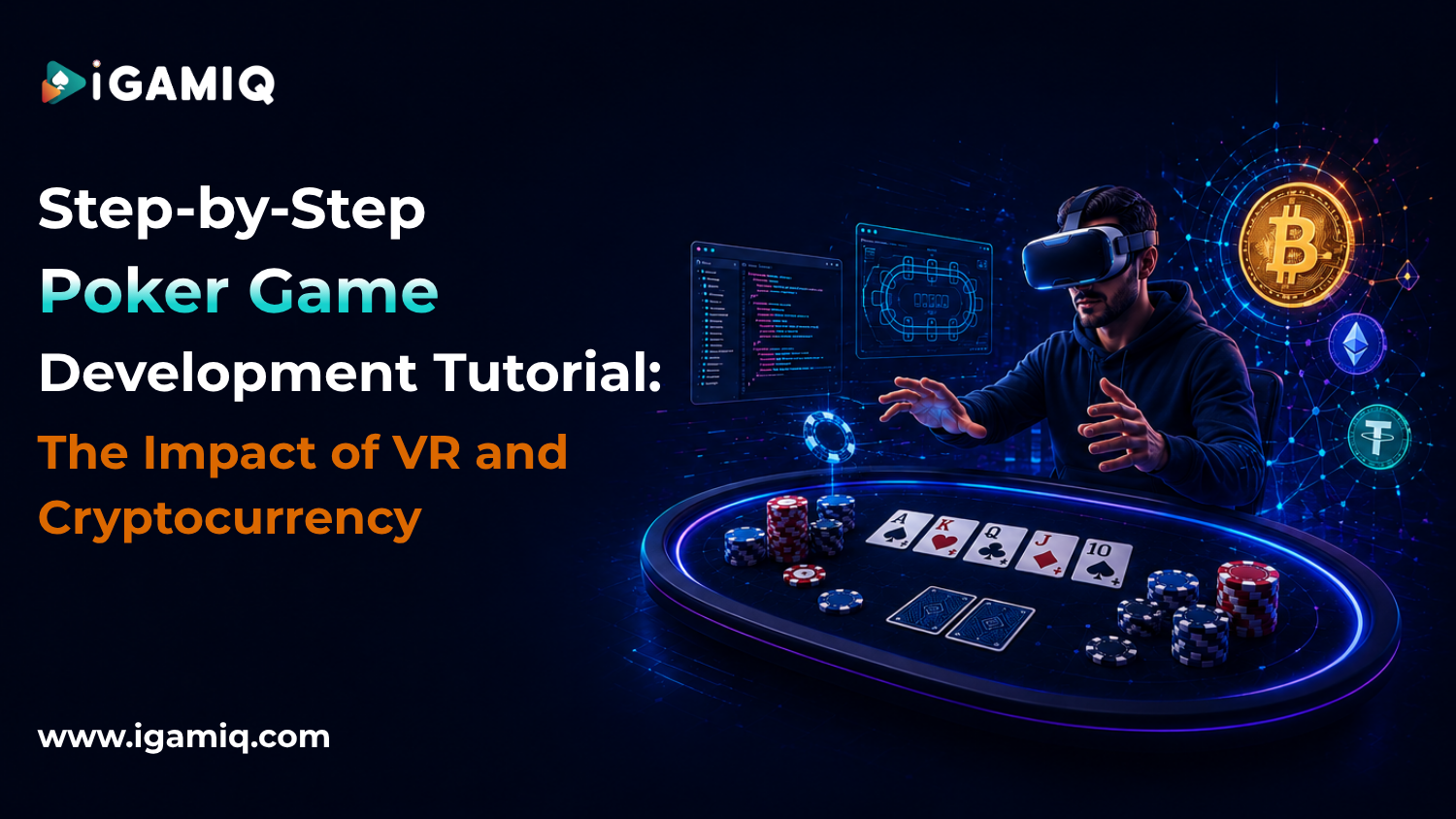
The poker game development industry has grown tremendously over the past 10 years. Millions of players now log into digital platforms every day to check their skills and luck against opponents from around the world. But success brings new expectations. Players no longer want flat screens and anonymous tables. They want immersion, security, and speed.
This demand has pushed into new territory, where two technologies stand out as the most influential forces shaping the industry today. Virtual reality transforms how players experience the game. Cryptocurrency changes how they trust and transact within it.
This guide explains how VR and cryptocurrency are reshaping poker development. You will learn what works, what the challenges are, and how to build a poker platform that meets modern player expectations. We will also introduce iGamiq, a leading poker game development company that specializes in these advanced development solutions.
Table of Contents
What Is Poker Game Development?
Understanding Modern Poker Software Development
Poker game development is the process of designing, coding, and launching digital poker platforms for web, mobile, or VR devices. It goes far beyond simply replicating the rules of the card game. Developers must build real-time multiplayer systems, secure payment infrastructures, and engaging user interfaces that keep players returning.
Modern poker software includes several popular variants, such as Texas Hold’em, Omaha, Seven Card Stud, 5 Card Draw, Video Poker, Tournament Poker, and more. Texas Hold’em is the most widely played version, known for its combination of strategy and accessibility. Omaha offers a more complex experience with four hole cards instead of two. Video poker provides a single-player alternative against a machine. Tournament Poker supports structured competitions with elimination rounds and prize pools.
A complete poker platform consists of several key components working together. The game engine handles card dealing, hand ranking, and betting logic. The multiplayer system manages connections between players. The payment infrastructure processes deposits and withdrawals. The user interface presents the game in a clear and attractive manner.
Core Features of a Poker Game Platform
Successful poker platforms share a common set of features.
- Multiplayer gameplay allows multiple players to sit at the same virtual table.
- A real-time game engine ensures that actions happen instantly without noticeable delay.
- RNG certification provides proof that cards are dealt fairly and randomly.
- Secure payment integration protects player funds during deposits and withdrawals.
- Chat and social features allow players to communicate during hands.
- An admin dashboard gives platform operators control over users, games, and finances.
- Leaderboards and tournament systems encourage competition and repeat engagement.
Without these features, a poker platform feels incomplete and drives players away.
What is VR Poker Platform? How VR Is Transforming Poker Game Development
Virtual reality poker places players inside a fully rendered 3D environment using a VR headset. Instead of clicking buttons on a flat screen, players look around the room, see other players as avatars, and interact with chips and cards using hand gestures or controllers.
The difference between traditional and VR poker
Traditional poker feels like watching a game through a window. VR poker feels like sitting at the table. You can lean in to see an opponent’s reaction. You can stack chips with your own hands. You can hear voices coming from specific directions. This sensory richness changes everything.
Benefits of VR in Online Poker Platforms
Immersive Player Experience
VR creates realistic poker tables and casino environments that pull and engage players into the game. The felt looks like felt. The chips stack like chips. The room around you feels like a real poker casino. This immersion keeps players focused and engaged for longer sessions.
Improved Player Engagement
Players return to platforms where they feel connected. VR poker builds that connection through presence and social interaction. A player who has bonded with other avatars at a virtual table is far less likely to abandon that platform than someone who only sees usernames on a screen.
Real-Time Communication
VR enables natural communication in ways that text chat never could. Players use voice chat to talk during hands. They use hand gestures to express frustration or celebration. They lean forward when holding a strong hand or sit back when bluffing. These non-verbal cues restore a layer of strategy that flat-screen poker lost.
Cross-Platform Compatibility
Modern VR poker platforms allow players on different devices to play together. Someone wearing an Oculus headset can sit at the same table as someone playing on a desktop computer. This cross-platform compatibility expands the player base and keeps tables full.
Technologies Used in VR Poker Game Development
Several technologies power VR poker platforms. Unity 3D is the most common game engine for VR development due to its extensive documentation and asset store. Unreal Engine offers superior graphics but has a steeper learning curve. Oculus SDK provides headset-specific tools for Meta devices. WebXR enables VR experiences directly in web browsers without downloads. AI-driven animations make avatars move and react realistically.
Common Challenges in VR Poker Development
- Hardware compatibility remains a barrier.
- Not every player owns a VR headset.
- Development costs are significantly higher than traditional poker platforms because of the 3D asset creation and specialized programming required.
- Latency optimization is critical, as any delay between player actions breaks immersion.
- Security concerns also multiply in VR environments where player tracking data adds new privacy risks.
The Role of Cryptocurrency in Poker Game Development
Why Crypto Poker Platforms Are Growing These Days
Cryptocurrency adoption has exploded across online gaming. Players increasingly trust blockchain systems more than traditional banking. They want anonymous transactions that do not require sharing personal information. They want faster withdrawals that do not take days to process. Crypto poker platforms deliver exactly this.
Benefits of Cryptocurrency in Poker Apps
Faster Deposits and Withdrawals
Traditional poker platforms often take three to five business days to process withdrawals. Crypto transactions clear in minutes or even seconds. Players can deposit funds and join a table immediately. They can cash out winnings and see the money in their wallet the same day.
Enhanced Security and Transparency
Blockchain technology records every transaction on a public ledger. This transparency prevents fraud and allows players to verify that funds moved correctly. Smart contracts can automate payouts without human intervention, removing the risk of operator error or dishonesty.
Global Accessibility
Traditional payment systems exclude players from certain countries due to banking restrictions or gambling regulations. Cryptocurrency does not care about borders. Anyone with an internet connection and a crypto wallet can join a crypto poker platform.
Lower Transaction Fees
Credit card processors and e-wallets charge fees that eat into player winnings and operator profits. Crypto transaction fees are typically much lower, especially on networks like Polygon or Binance Smart Chain.
Popular Cryptocurrencies Used in Poker Platforms
Bitcoin remains the most recognized cryptocurrency and is accepted on most crypto poker sites. Ethereum offers faster transaction speeds and supports smart contracts. USDT provides stability by pegging its value to the US dollar. Litecoin offers even faster and cheaper transactions than Bitcoin.
Blockchain Features in Poker Game Development
Smart contracts automate bets, payouts, and tournament prize distributions without manual intervention. Provably fair gaming allows players to verify that every hand was dealt randomly and fairly. NFT rewards give players unique digital assets that can be traded or sold. Decentralized wallets keep players in control of their own funds at all times.
Step-by-Step Poker Game Development Tutorial: Zero to Advanced
Step 1: Define Your Poker Business Model
Your first decision is how your platform makes money. Real-money poker charges fees on each hand or tournament entry. Social poker generates revenue through in-app purchases of virtual chips. Crypto poker combines elements of both, often with lower fees. VR poker casinos add immersive environments as a premium feature.
Step 2: Choose the Right Poker Variant
Texas Hold’em is the safest choice because it is the most familiar to players. Omaha appeals to more experienced players seeking complexity. Stud poker attracts a niche audience that prefers 5-card or 7-card poker formats. Many platforms launch with Texas Hold’em and add other variants later.
Step 3: Select Technology Stack
Your frontend technologies depend on your target platforms. React works well for web interfaces, and Unity or Unreal Engine is required for VR. For backend development, Node.js or Go provides the speed needed for real-time multiplayer. PostgreSQL or MySQL handles player data and transaction records. Cloud hosting on AWS or Google Cloud ensures scalability.
Step 4: Design UI/UX
Mobile-first design ensures your platform works on phones and tablets. Intuitive gameplay means players understand how to bet, fold, and raise without reading a manual. VR-ready interfaces require completely different design thinking focused on spatial interaction rather than mouse clicks.
Step 5: Develop Multiplayer Architecture
Real-time sockets using WebSocket protocols keep all players synchronized. A matchmaking engine pairs players of similar skill levels. Tournament systems manage registration, seating, blind structures, and prize distribution automatically.
Step 6: Integrate Cryptocurrency Payments
Wallet integration allows players to connect their own crypto wallets like MetaMask or Trust Wallet. Blockchain APIs handle transaction verification. Payment gateways designed for crypto provide fiat on-ramps for players who want to convert traditional money into cryptocurrency.
Step 7: Add VR Features
A 3D casino environment requires modelling tables, chairs, chips, and cards at the correct scales. An avatar system lets players customize their appearance. Voice communication integration enables natural table talk without typing.
Step 8: Security and Compliance
SSL encryption protects all data transmitted between players and your servers. Anti-fraud systems detect collusion and bots. Licensing and regulations vary by jurisdiction. You must research the legal requirements for every market where you plan to operate.
Step 9: Testing and Deployment
QA testing catches bugs in gameplay logic and user interface. Load testing simulates thousands of concurrent players to ensure your servers can handle peak traffic. Cross-device compatibility testing confirms that your platform works on every headset, phone, and computer you claim to support.
Essential Features for a Modern Poker Platform
- AI-powered fraud detection identifies unusual betting patterns that might indicate collusion or bot activity.
- Multi-table support allows serious players to participate in several games simultaneously.
- Cross-platform gameplay ensures that VR, mobile, and desktop players can all share the same tables.
- Loyalty and reward systems give players reasons to return daily.
- Live dealer integration bridges the gap between online and land-based poker.
- A poker analytics dashboard provides operators with real-time data on player behavior and platform performance.
- Responsible gaming tools allow players to set deposit limits and self-exclusion periods.
Cost Estimation of Poker Game Development With VR and Cryptocurrency
Factors affecting development cost include platform complexity, VR integration depth, blockchain development requirements, security infrastructure needs, and custom feature requests.
- A basic social poker app without VR or crypto might cost $30,000 to $50,000.
- Adding cryptocurrency support increases the budget to $60,000 to $100,000.
- Full VR integration with 3D environments pushes costs above $150,000.
Estimated development timelines vary by scope. An MVP with core features only might take three to four months. Full-scale deployment with VR, crypto, and tournament systems often requires 6 to 9 months. Maintenance and upgrades continue indefinitely, typically costing 15 to 20 percent of the original development budget annually.
Future Trends in Poker Game Development
Metaverse poker casinos will place virtual card rooms inside persistent digital worlds where players also shop, socialize, and attend events. AI-based poker opponents will provide realistic practice partners for players learning the game. Web3 poker ecosystems will give players true ownership of their in-game assets through NFTs. NFT-based poker rewards will include exclusive card backs, avatar clothing, and even seats at special tournaments. AR and mixed reality poker will overlay digital tables onto real-world surfaces, visible through phone cameras or smart glasses.
Why Choose iGamiq for Poker Game Development?
End-to-End Poker Software Development
iGamiq builds custom poker platforms from the ground up, tailored to your specific business requirements. For clients seeking faster deployment, iGamiq also offers white-label poker solutions that can be branded and launched within weeks.
Expertise in VR and Blockchain Gaming
The iGamiq team has delivered advanced VR environments that rival the immersion of land-based casinos. Their secure crypto integration supports multiple currencies and blockchain networks.
Scalable and Secure Infrastructure
Every iGamiq platform runs on a cloud-ready architecture that scales automatically as your player base grows. Enterprise-level security measures protect player data and funds at all times.
Customizable Poker Solutions
iGamiq provides UI/UX customization to match your brand identity. Multi-currency support allows players to choose their preferred cryptocurrency. Tournament management systems handle events of any size, from small sit-and-gos to major championships.
Dedicated Support and Maintenance
All iGamiq clients receive 24×7 technical support from experienced engineers. Regular updates keep your platform current with new features and security patches. Performance optimization ensures that response times stay low even during peak traffic.
Cost-Effective Development Services
iGamiq offers flexible pricing models that work for startups and established operators alike. Faster deployment timelines get your platform to market before competitors.
Conclusion
VR and cryptocurrency are not experimental technologies waiting for adoption. They are actively reshaping poker game development right now. VR brings immersion and social presence that flat-screen poker cannot match. Cryptocurrency brings speed, transparency, and global accessibility that traditional banking cannot offer.
Choosing the right poker software provider determines whether your platform leads this transformation or lags behind it. iGamiq delivers the expertise, technology, and support needed to build poker platforms that players trust and enjoy. If you are ready to develop a VR poker platform, a crypto poker platform, or both, contact us today.
Frequently Asked Questions
1. Do I need VR hardware to play VR poker games?
Yes. You need a compatible VR headset like Oculus Quest, HTC Vive, or PlayStation VR to experience full virtual reality poker.
2. Can VR poker players play against non-VR players?
Yes. Most modern VR poker platforms support cross-platform play, allowing VR users to compete against desktop and mobile players.
3. Is cryptocurrency gambling legal in all countries?
No. Laws vary by country. You must research regulations in every market where your platform will operate before launching.
4. How do crypto poker platforms verify fair gameplay?
Blockchain records hand outcomes and cryptographic commitments. Players can independently verify that cards were dealt fairly.
5. What is the most popular VR poker platform currently?
PokerStars VR is the most established platform, offering realistic environments and active player communities.
6. Which cryptocurrency is best for poker transactions?
USDT is popular for its stable value. Bitcoin and Ethereum are widely accepted but have higher transaction fees and price volatility.
7. How much does it cost to develop a VR crypto poker game?
Basic VR integration starts around $80,000. Full platforms with advanced VR and multi-crypto support can exceed $200,000.
8. Can I use my existing crypto wallet for poker deposits?
Yes. Most crypto poker platforms support WalletConnect and direct wallet connections like Metamask and Trust Wallet.
9. What is provably fair gaming in crypto poker?
Provably fair means players can verify every hand’s randomness using cryptographic algorithms without trusting the platform operator.
10. Why choose iGamiq for VR and crypto poker development?
iGamiq specializes in both VR environments and blockchain integration, delivering secure, scalable, and immersive poker platforms.