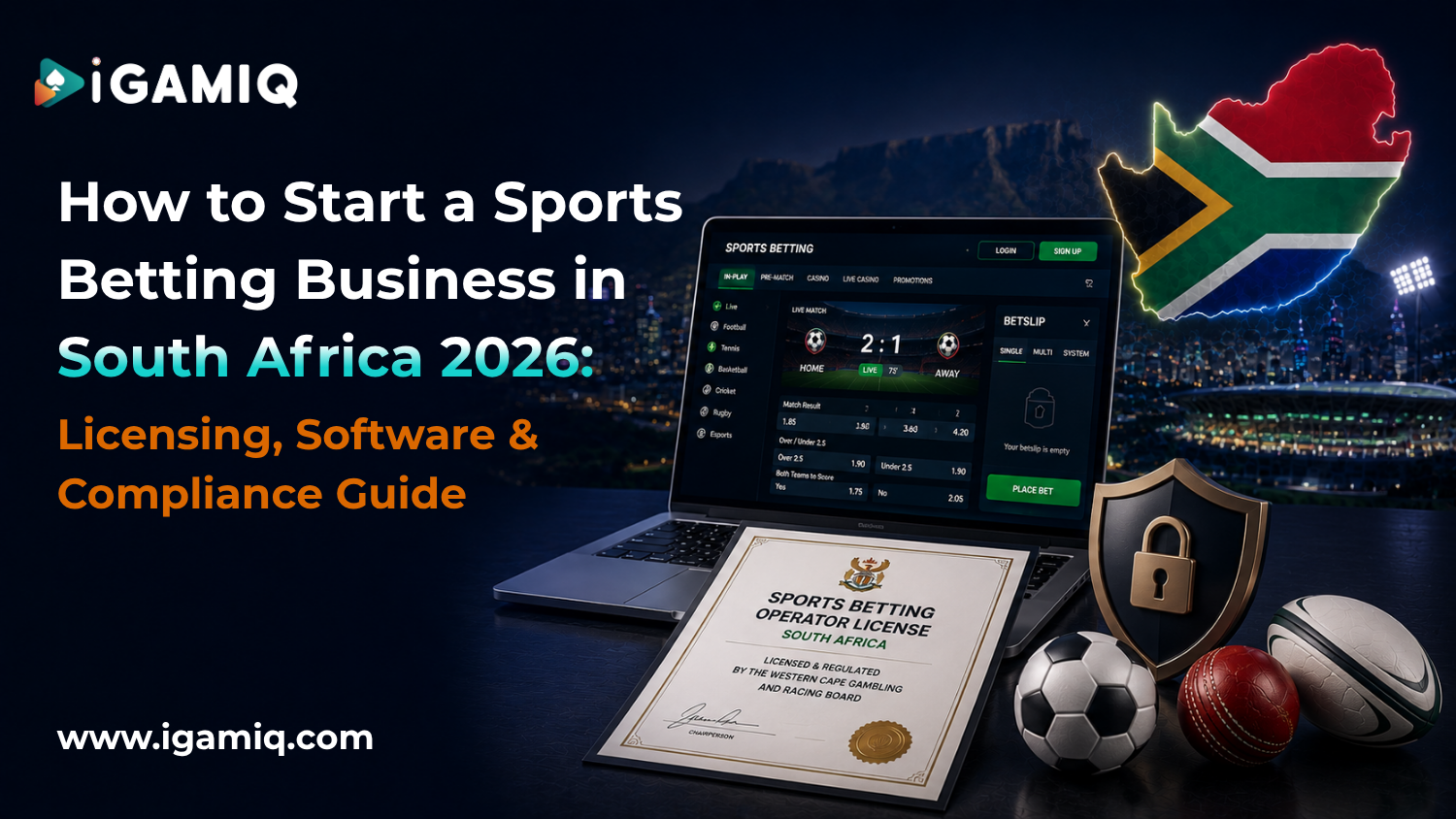
South Africa is not an emerging betting market; it is a mature, regulated powerhouse, and it is a great opportunity to start sports betting in South Africa as a business. With total wagering turnover reaching €76 billion (R1.5 trillion) in FY2024/25 and online betting growing at 26% annually, the country offers the most sophisticated gambling jurisdiction on the African continent. Sports betting has been legally regulated since the National Gambling Act of 1996 (updated in 2004). Unlike many African nations, South Africa has nearly three decades of settled gambling law, active provincial oversight, and a clear distinction between legal bookmaking and illegal street betting.
However, the regulatory model is provincial, not national. You must obtain a license from one of the nine Provincial Licensing Authorities (PLAs). That single provincial licence then permits you to accept bets online from anywhere in South Africa. Online casino games (slots, roulette, blackjack) remain illegal for South African operators serving the local market. Only sports betting and horse racing are permitted online. For iGamiq partners and operators, this guide delivers a compliance-first roadmap to launching a successful business of sports betting in South Africa in 2026.
Who Regulates Sports Betting in South Africa?
| Body | Role |
| National Gambling Board (NGB) | National oversight, policy coordination, and compliance standards |
| Provincial Licensing Authorities (PLAs) | Issue licences, conduct probity checks, and enforce compliance |
| Western Cape Gambling and Racing Board (WCGRB) | Most experienced PLA and processes B2B supplier licences |
The Western Cape, Mpumalanga, and Gauteng together account for 79% of national GGR, making them the most attractive provinces for licence applications.
iGaming Licence Types in SA, Costs & Requirements (2026 Update)
| Licence Type | Purpose | Cost Range (ZAR) |
| Bookmaker Licence | Core commercial licence to accept bets | R13,800 – R500,000+ (€712 – €25,800+) |
| Key Employee Licence | Required for directors, compliance officers, and trading managers | Individual assessment fees apply |
| Bookmaker Premises Licence | Covers the registered operational address | Included in the bookmaker application |
Key Requirements to obtain an Online Gambling License in South Africa
- Legal entity registered in South Africa (Pty Ltd recommended)
- Physical office within the province where you apply
- Directors and key employees pass probity checks (no criminal records)
- Financial stability demonstrated via audited statements
- Responsible gambling policy approved by the PLA
- AML/KYC framework aligned with FIC Act
How much time can it take: The licence application alone takes 6 to 9 months. Total time from company registration to first bet is typically 12–18 months.
Sports Book Business in South Africa: Build vs. Buy in 2026
Before starting sports betting in South Africa, your platform choice determines time to market, feature depth, and scalability.
| Factor | Turnkey (Buy) | Proprietary (Build) |
| Cost | Moderate, predictable fees | €920,000 – €2.76 million+ |
| Time to market | 3 to 6 months | 12 to 24+ months |
| Customisation | Configurable instance | Full control |
| Compliance risk | Provider-managed | Operator-owned |
| Maintenance | Included in SaaS fee | Internal team required |
For most new entrants, a turnkey B2B sportsbook provider is the rational choice. You own the operator instance, control the UX, and launch in months, not years.
Choosing a Software Provider to Start Sports Betting in South Africa
1. Modular architecture: Activate features incrementally
2. SaaS delivery: Provider manages infrastructure and security patches
3. Native ZAR support: No currency conversion friction
4. Pre-certified by GLI South Africa: Avoids months of technical audit
5. Multi-language support: English, Afrikaans, Xhosa, Zulu minimum
6. Proven scalability: Handles Springboks test-match traffic spikes
The iGamiq Sportsbook is B2B licensed by the WCGRB, GLI South Africa certified, and supports native ZAR with pre-built API integrations for data feeds and KYC tools.
Sports Data Feeds & Odds Management
Live data feeds power every bet. Odds management starts with feed quality.
| Criterion | Why It Matters |
| Low latency | Even a 3-second delay can create arbitrage opportunities and pricing risks |
| Data integrity | Ensures accurate event creation, settlement, and void processing |
| Coverage breadth | Supports South African sports like rugby, soccer, and cricket along with global leagues |
| Betting automation | Enables automated odds movement and fast result settlement |
Horse racing operates under a distinct framework—Gold Circle and Phumelela manage totalisator systems. Adding horse racing requires understanding these relationships.
Payment Processing for Bettors for Sports Betting in South Africa
South Africa’s payment landscape is mobile-native but partially unbanked. Your stack must reflect that reality. Here are the must-have payment methods:
| Method | Why It Matters |
| Mobile EFT / Banking apps | Main deposit method for most bettors |
| Visa / Mastercard | Preferred by urban users with traditional banking access |
| Skrill / Neteller | Offers faster transactions and more privacy for online-savvy users |
| Cryptocurrency (Bitcoin, USDT) | Growing demand and helps reduce processing costs |
| Mobile carrier payments | Useful for unbanked and underbanked users |
Key requirements for payment methods
- All transactions in South African Rand (ZAR)
- SSL encryption across all payment touchpoints
- PCI-DSS alignment for card processing
- Fast payouts or instant withdrawals are a top retention lever
Cryptocurrency is permitted in South Africa for gambling, unlike in Brazil or Romania. This is a competitive advantage.
Which Sports & Betting Markets to Offer in South Africa
| Sport | Betting Types | Priority |
| Rugby (Springboks) | Pre-match, in-live, props | Peak traffic driver |
| Soccer (PSL, EPL) | Pre-match, in-play, bet builder | Highest daily betting volume |
| Cricket | Pre-match, in-live | Strong seasonal demand |
| Horse racing | Pre-match, tote | Separate regulatory framework |
| Tennis | Pre-match, in-live | Consistent year-round volume |
| Basketball | Pre-match, in-live | Popular with the urban youth market |
| eSports (Dota 2, CS) | Pre-match, in-live | Fastest-growing betting segment |
Highest-margin post-launch enhancements: In-live betting and bet builder.
Compliance, AML, KYC & Responsible Gambling
Licensed operators are accountable institutions under the Financial Intelligence Centre Act (FIC Act) 38 of 2001.
| Area | Requirements |
| KYC | Identity verification during registration and address verification above the required thresholds |
| AML | Ongoing transaction monitoring and suspicious activity reporting to the FIC |
| Fraud prevention | Duplicate account detection and device fingerprinting |
| Data protection | Privacy policy compliant with POPIA regulations |
| Responsible gambling | Self-exclusion tools, deposit limits, reality checks, and NRGP helpline access |
Responsible Gambling Tools (Mandatory)
- Self-exclusion (temporary and permanent)
- Deposit and betting limits
- Reality checks with session time alerts
- Direct links to the National Responsible Gambling Programme (NRGP)
- Register with the NRGP before accepting your first bet.
Marketing Strategy for Your Sports Betting Business
- Legal Constraints (National Gambling Act 2004)
- All communications must include responsible gambling warnings
- NRGP helpline number required in every ad
- 18+ participation statements
- No targeting of minors or vulnerable groups
Monetization Channels in South Africa for iGaming Sites
| Channel | Effectiveness | Notes |
| Affiliate marketing | Highest ROI | Revenue share (25–40%) or CPA models; often managed through Affilka |
| SEO | Compound growth | Builds long-term organic visibility for high-intent betting keywords |
| Sponsorships | Strong local ROI | Sponsoring local clubs helps increase trust and brand recognition |
| Social media | Brand engagement | Direct gambling ads may be restricted, but organic content performs well |
Summary
South Africa is Africa’s largest, most mature betting market, but it is not a fast-entry jurisdiction. Licensing takes months, compliance is actively enforced, and provincial boards expect operational rigor from day one. For iGamiq, the strategy is clear. Choose your province wisely (Western Cape, Mpumalanga, or Gauteng).
Budget for a 12–18 month launch timeline and select a GLI-certified turnkey sportsbook provider. Build mobile-first and localize for languages and sports. Integrate responsible gambling as a feature, not an afterthought. Get the foundation right, and South Africa becomes a sustainable, high-volume anchor for your African betting portfolio. iGamiq can guide you through provincial licensing, platform certification, and compliance setup. Contact us for a launch-ready roadmap to start sports betting in South Africa.
Frequently Asked Questions (FAQs)
1. Do I need a gambling licence to start an online sports betting business in South Africa?
Yes. Operating without a valid provincial bookmaker licence is a criminal offence, not a civil infraction. Personal liability extends to directors and key employees. You must obtain a licence from one of the nine Provincial Licensing Authorities before accepting any bets.
2. How much does it cost to start a betting company in South Africa?
Total startup costs typically range from R4 million to R50+ million (€200,000 – €2.6M+) , depending on platform choice (turnkey vs. proprietary) and provincial licensing fees. The bookmaker licence alone costs between R13,800 and R500,000. A 20% contingency reserve is strongly recommended.
3. What is the best sportsbook software for a new operator?
For most new entrants, a turnkey B2B sportsbook provider is the best choice. Look for GLI South Africa certification, native ZAR support, SaaS delivery, and pre-built API integrations. Proprietary builds cost €920,000+ and take 12–24 months—suitable only for well-capitalized operators.
4. Can I accept cryptocurrency payments from South African bettors?
Yes. Unlike Brazil or Romania, cryptocurrency is permitted for gambling payments in South Africa. Bitcoin, Ethereum, and stablecoins can be accepted. However, all transactions must still comply with AML/KYC obligations under the FIC Act.
5. How long does it take to launch an online sportsbook in South Africa?
Realistically, 12 to 18 months from company registration to first bet. The licence application takes 6 to 9 months alone. A turnkey platform adds 3 to 6 months of integration. Any promise of 60 days from a standing start means compliance corners are being cut.